Best Time to Visit La Maddalena: Month by Month, Crowds and Boat Season
La Maddalena weather this week
La Maddalena (27 m)
The five-day forecast for La Maddalena, updated through the day.
Forecast data from MET Norway (CC BY 4.0), summarised by day.
The best time to visit La Maddalena is June or September. Both months are hot, dry and good for swimming, the boat trips into the archipelago are running, and there is noticeably more room on the beaches and the water than in July and August, when the park is at its busiest. May and October suit walkers and travellers who want the islands quiet, with mild days and a sea that is cool but swimmable for many. Winter is for walking on Caprera, museum visits and seeing the town at its own pace, not for beach days.
This guide goes through the year month by month with the climate averages, then covers crowds, the boat season, wind, festivals and what opens and closes out of season.
The climate in numbers
The nearest long-term weather station is at Olbia airport, on the Sardinian coast south of the archipelago. Its averages for 1991-2020 give a good picture of the seasons; the islands themselves are often a little windier.
| Month | Average high (°C) | Average low (°C) | Rain (mm) | Days with rain |
|---|---|---|---|---|
| January | 14.3 | 4.8 | 60 | 7 |
| February | 14.7 | 4.6 | 42 | 6 |
| March | 16.9 | 6.1 | 48 | 5.5 |
| April | 19.6 | 7.9 | 52 | 5.4 |
| May | 23.8 | 11.3 | 34 | 4.3 |
| June | 28.7 | 15.7 | 15 | 2 |
| July | 31.9 | 18.7 | 8 | 0.9 |
| August | 31.9 | 18.8 | 9 | 1.6 |
| September | 27.9 | 15.9 | 42 | 4.1 |
| October | 23.6 | 12.2 | 62 | 6.1 |
| November | 18.5 | 8.8 | 87 | 8.5 |
| December | 15.2 | 5.8 | 65 | 7.9 |
Days with rain are days with at least 1 mm. Across the year Olbia averages 526 mm of rain on 59 days, most of it between October and March. For the next few days, check the forecast on the weather page on this site.
The seasons at a glance
- High summer (July and August): hottest, driest and busiest. Every boat trip runs, every beach bar is open, and everything is crowded.
- Shoulder summer (June and September): almost as warm, far fewer people. The best all-round months.
- Spring and autumn (April, May and October): mild, green and quiet. Good for walking and sightseeing; some boat services and beach bars run a reduced season.
- Winter (November to March): cool, wetter and quiet. The ferries keep running and the town lives its own life.
Month by month
January and February
The coldest months, with average highs around 14.3 to 14.7°C and lows below 5°C. Rain falls on about six or seven days a month. This is the season for Caprera’s trails, empty roads and the town’s cafés. The park recommends its Caprera trails all year, from January to December, and on a clear winter day the views from Monte Tejalone reach far across the strait.
March and April
Spring arrives: highs of 16.9°C in March and 19.6°C in April. The scrub flowers and the walking is at its best. The sea is still cold for most swimmers. Palau’s carnival is a reason to visit in winter for those who like a festival.
May
Highs of 23.8°C and only 34 mm of rain make May a lovely month for walking and the first swims. Boat trips start to run, and the beaches are almost empty on weekdays.
June
Highs reach 28.7°C and rain drops to 15 mm. June has long days, warm sea and fewer visitors than high summer. The ordinance’s seasonal measures apply from 1 June to 30 September each year, so the summer rules on the water come into force, and in Delcomar’s timetable valid from 1 June, ferries leave Palau from 06:30 until 20:00, roughly every half hour, with night crossings continuing until 04:30.
July
The hottest and driest month: 31.9°C on average and less than one rainy day. The patron saint’s feast is on 22 July, one of the busiest days in town. Book boat trips, accommodation and the Garibaldi museums ahead.
August
As hot as July, and the peak of the Italian holiday season. Every summer up to six thousand boats a day crowd the park’s waters, and the crowding peaks now. In Porto Rafael, on the coast near Palau, on 11th August dancers in white tunics honour him in the piazza, celebrating the count who founded the village.
September
Many people’s favourite month. Highs of 27.9°C, a warm sea after the summer, and the crowds thin after the first week. Palau’s main feast, for Santa Maria delle Grazie, is at the start of September. Rain returns late in the month, but 42 mm falls on only about four days.
October
Highs of 23.6°C and the first real rain: 62 mm on about six days. The sea is still warm enough for many swimmers early in the month. Boat trips and beach services wind down; check what is running on your dates. From 26 October 2026 the Memoriale opens only in the morning, 8:30–13:45, last entry 13:00.
November and December
The wettest stretch, with 87 mm in November and 65 mm in December. Highs of 18.5°C and 15.2°C keep walking pleasant between showers. In autumn and winter the holm oak wood fills with boletes and other colourful fungi, not all of them edible, on the Monte Tejalone trail on Caprera.
Crowds: when the islands are busiest
The archipelago’s crowds follow the Italian summer.
- August is the busiest month by far, especially around the middle of the month. Ferries from Palau, beach car parks and boat departures are all at their fullest.
- July is close behind, with the patron saint’s feast on 22 July adding to the town’s crowds.
- June and September are busy at weekends but noticeably quieter on weekdays.
- Out of season you may have Caprera’s trails and even the bigger beaches almost to yourself.
Ways to beat the crowds in high summer:
- Take an early ferry and be on the beach or the boat first thing.
- Choose the east and south coasts in the afternoon, when the north-coast beaches fill.
- Pick a boat trip that leaves early or reaches the outer islands first.
- Visit Garibaldi’s home on Caprera at opening time: the Compendio Garibaldino (the White House, grounds and cemetery) opens 08:30–19:30, last entry 18:30, with timed entry of at most 20 people every 15 minutes; booking is strongly recommended.
The boat season
Most visitors come for the boat trips to Spargi, Budelli, Santa Maria and Caprera’s coves.
- Peak season (June to September): the full range of trips runs daily, from Palau, La Maddalena and the Costa Smeralda. The full-day boat trip from Palau lasts 7 hours, with several swim stops.
- Shoulder season (spring and October): fewer departures, and trips may be cancelled in wind. Book trips that state their dates.
- Winter: organised boat trips are rare, though the ferries from Palau keep running.
Our guide to boat trips and beaches compares the itineraries.
Wind: the mistral
Wind shapes a day at La Maddalena as much as temperature. The mistral blows from the north-west and can turn the north coast rough, cancel small-boat trips and make the ferry crossing lively.
- Cala Spalmatore is sheltered from the north-westerly wind, which makes it the beach to head for when the mistral blows.
- Cala Portese offers boats a sheltered landing on mistral days.
- Its constant wind makes Monti d’Arena popular with windsurfers, so windy days have their fans.
Mistral days can come in any season. Keep a flexible day in your plan, and see our guide to the beaches you can reach by car for which way each one faces.
Swimming season
There is no long-term sea temperature record in the averages above, but the pattern is familiar across northern Sardinia: the sea is coldest in late winter and warmest at the end of summer. Most people find it comfortable from June to early October, and the sea keeps its summer warmth well into September. In May and late October, a short swim on a sunny afternoon is pleasant for many; a wetsuit helps for snorkelling.
Walking and sightseeing
For Caprera’s trails, Garibaldi’s home and the town, the cooler months are better.
- Spring and autumn are ideal for the park’s trails; see Caprera walks and hiking.
- Summer walks should start at first light; the granite holds the heat.
- Museums: both Garibaldi museums close on Sundays, and hours vary with the season. Check before you go.
Festivals and events
| When | What | Where |
|---|---|---|
| Carnival season | Carnival | Palau |
| 22 July | Feast of the patron saint, Santa Maria Maddalena | La Maddalena town |
| 11th August | Dance in honour of the founder | Porto Rafael |
| Early September | Feast of Santa Maria delle Grazie | Palau |
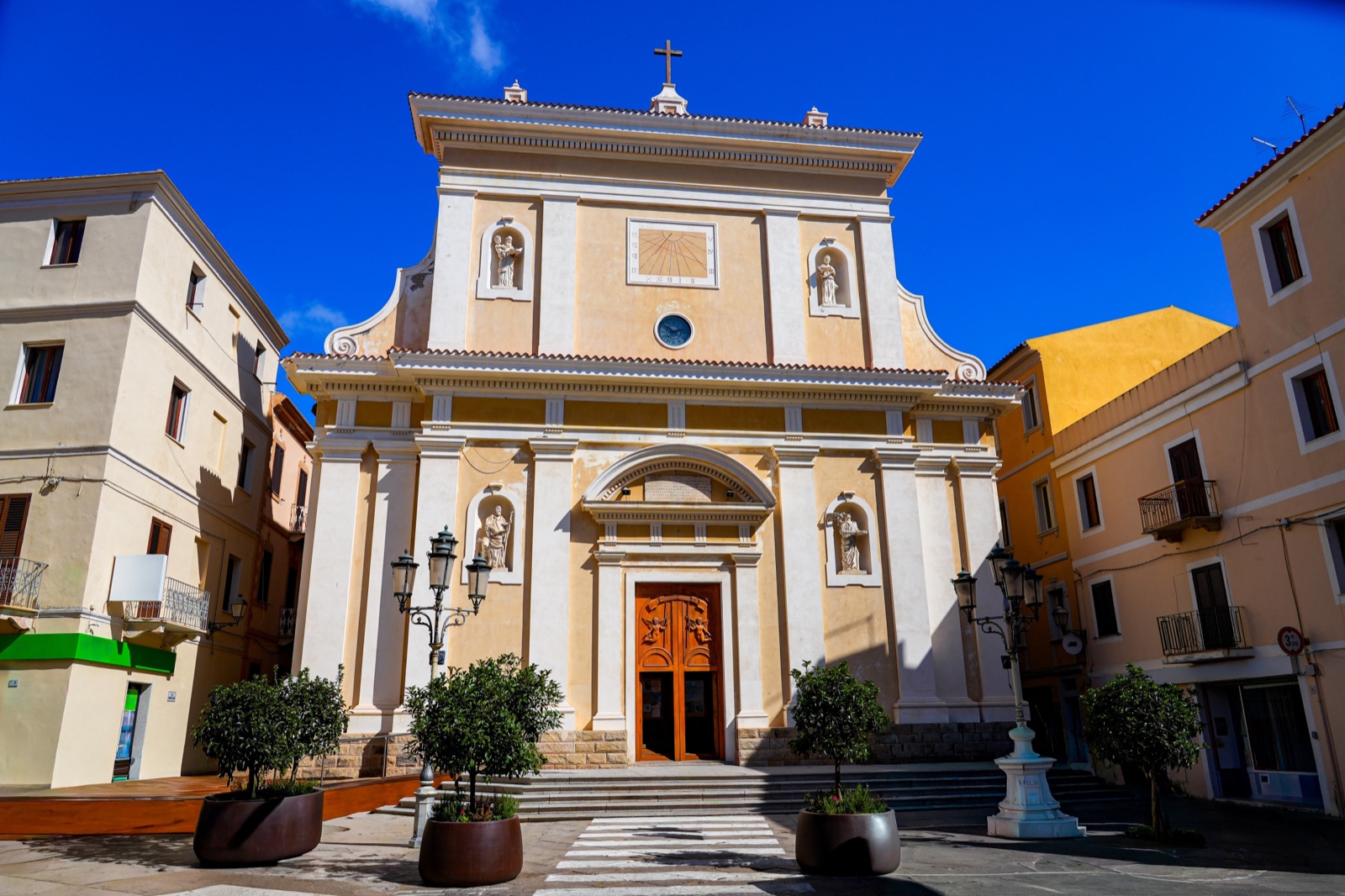
The patron saint’s feast is on 22 July, and the Diocesan Museum next to the church holds its treasure.
What changes out of season
- Ferries: they keep running between Palau and La Maddalena out of season; check the winter timetable.
- Boat trips and hire: most operate from late spring to early autumn.
- Beach bars and hire kiosks: mostly summer only.
- Hotels and restaurants: many close in winter, so book ahead and check opening dates; the town keeps a core open all year, since La Maddalena has 10,449 inhabitants (2026).
- Museums: shorter winter hours, as at the Memoriale.
The best time for each activity
| Activity | Best months | Why |
|---|---|---|
| Boat trips | June to September | Full timetables, warm water, calmer seas |
| Beach days | June and September | Hot and dry, fewer people than high summer |
| Snorkelling and diving | June to September | Warmest water and the full range of dive centres |
| Walking on Caprera | March to May, October | Mild days, flowering scrub, little heat |
| Sightseeing and museums | Spring and autumn | Comfortable temperatures, fewer queues |
| Photography | May, June, September | Long days, clear light and soft evenings |
| Quiet travel | October to April | Empty roads and trails, the town at its own pace |
The Pink Beach, Cala Coticcio and the protected coves
Two of the archipelago’s most famous places are protected all year, so the season changes how you see them rather than whether you can.
- The Pink Beach. The beach is in the park’s zone of full protection, and since 1994 access, transit, stopping and bathing have been forbidden; it can be admired only from the sea. In summer the boat trips pass it daily; out of season, check that trips are running.
- Cala Coticcio. Cala Coticcio and Cala Brigantina on Caprera lie in highly protected zones and can be reached on foot only with a licensed environmental hiking guide. The guided walks are most comfortable outside the hottest weeks. The walk to Cala Coticcio is tiring and needs trainers and plenty of water; the last part is rather steep.
- Spiaggia del Cavaliere. Spiaggia del Cavaliere on Budelli, a natural pool overlooking Porto della Madonna, has been only partially open since the summer of 2020 because of erosion.
What to book ahead
In high summer, three things fill up first.
- Boat trips. Popular departures from Palau and La Maddalena sell out in July and August; book a few days ahead, and choose a trip with a clear cancellation policy in case of wind. See the boat tours.
- Garibaldi’s home. Booking is strongly recommended for the Garibaldi museums, and timed entry is limited.
- The Cala Coticcio walk. Guides have limited places, and the €3 park ticket is valid only for the day stated and cannot be refunded if unused.
Accommodation on the islands is limited, so for July and August it pays to book well ahead, especially in La Maddalena town.
Getting there in each season
The ferry from Palau is the gateway in every season.
- In summer, sailings are frequent from early morning until late evening, with night crossings as well.
- In spring and autumn, the timetable is thinner; check it before you plan a late return.
- In wind, small boat trips are the first things to be cancelled, so keep a spare day.
Our guide to getting to La Maddalena covers the routes from Olbia and the ferry in detail.
What to pack by season
- Summer: sun hat, high-factor sunscreen, a rash vest for snorkelling, water shoes for granite coves, and a light layer for the evening breeze on the ferry.
- Spring and autumn: a windproof jacket, a warm layer for the evenings, walking shoes for Caprera and a swimsuit for warm afternoons.
- Winter: a waterproof jacket and warm layers; the wind can make mild temperatures feel much colder on the water.
- All year: a reusable water bottle and a bag to take your rubbish home, since the whole archipelago is a national park.
How long to stay
- One day: possible from Olbia or the Costa Smeralda with a full-day boat trip. Ferries link La Maddalena with Palau, 40 km from Olbia; Olbia airport is just over 40 km from Palau.
- Two or three days: a boat day, a beach day by car and a day on Caprera with Garibaldi’s home.
- A week: time to wait out a windy day, walk the trails and see the islands from both land and sea.
For where to base yourself, see our guide to where to stay for La Maddalena.
Travelling with children
For families, June and the first half of September are the sweet spot: the sea is warm, the shallow beaches such as Bassa Trinità and Cala Spalmatore are calm on most days, and the heat is easier to manage than in late July and August. The sandy seabed slopes gently away from the shore and is suitable for both families and snorkellers at Spalmatore. In high summer, plan beach time for the morning and late afternoon, and use the hottest hours for the shaded rooms of Garibaldi’s home or a siesta.
Frequently asked questions
What is the best month to visit La Maddalena?
June or September: hot, dry, good for swimming and boat trips, and less crowded than July and August.
When is La Maddalena busiest?
In August, followed by July. Every summer the park’s waters see up to six thousand boats a day.
Is La Maddalena worth visiting in winter?
Yes, for walking on Caprera, Garibaldi’s home and the town, but not for beach days or boat trips. Winter is the wettest season, with 87 mm of rain in November at Olbia.
When do boat trips to La Maddalena run?
Mainly from late spring to early autumn, with the full range of daily trips from June to September.